



Blog

Preparing Surfaces Before Painting

Preparing Surfaces Before Painting

Gansbaai Build it Plus

Preparing Surfaces Before Painting

Before you begin to paint, every surface requires some attention and preparation. It’s the difference between a great paint job and a sloppy one.

Removing Wallpaper

removing-wallpaper-(1).jpg

This process can get messy and will get a lot of water on the floor, so make sure you've securely taped off baseboards and covered the entire floor.

  1. Use a scoring tool to slice the wallpaper
    • This will allow the wallpaper remover to penetrate the paper more effectively.
    • For wallpaper that has been painted, slice and puncture as much paper as possible.
  2. Remove wallpaper adhesive
    • Wear rubber gloves when working with wallpaper adhesives.
    • Follow the manufacturer's instructions carefully.
    • Use a scraper on residual adhesive.
  3. Rinse the walls with hot water

Preparing Walls and Ceilings

walls-ceilings.jpg

How to mend cracks, holes and dents before painting!

  1. Wear safety glasses and a dust mask.
  2. Use a putty knife to remove any chips or flakes.
  3. Clean the crack or hole with a brush or vacuum.
  4. Rinse with hot water and let the area dry thoroughly.
  5. Using a putty knife, fill the cracks with a wall filler mixture, spreading the filler past the edges of the crack.
    • Smooth the filler while it’s still wet.
    • For large cracks in your walls, Build it has the appropriate products.
  6. Once the filler mixture is dry, sand it with a fine-grit sandpaper.
  7. Once the filler is smooth, again, clean the area with water.
  8. Rinse the area and let it dry before priming.

Preparing Moulded Areas

mould.jpg

  1. Use fine-grit sandpaper or a sanding sponge to sand small gaps.
  2. Then remove hard-to-reach dust using a hand vacuum with a brush attachment.
  3. Use a putty knife and wood filler to rebuild chipped corners and fill in dents.
  4. Apply spackling paste on scratches and small cracks.
  5. Finish the repair the same way as repairing wall surfaces.
  6. When all the holes are patched, prime the repaired surfaces.

Priming

primer.jpg

A coat of primer is recommended for almost all painting projects, whether it's new drywall, old wood, bare metal, previously painted brick, or any other surface.

  1. Applying primer is done pretty much the same way as paint.
  2. Don't wait too long after priming to apply the finishing coat of paint.
  3. Check the instructions on the primer can to determine how quickly you should start painting once the primer has completely dried.
  4. Now you're ready to apply your first coat of paint.
Preparing Surfaces Before Painting

Gansbaai Build It

Gansbaai Build it Plus forms part of the fastest-growing hardware and building materials group in Southern Africa. The Build it name embraces all activity within the hardware and building industry and supplies quality building materials at the best possible prices for large and small-scale building ...

View Profile

What is Xplorio?

Xplorio is your local connection allowing you to find anything and everything about a town.

Watch the Gansbaai Video
Read More

Recent Posts

Choosing the Right Flooring: A Comprehensive Guide for Homeowners

Choosing the Right Flooring: A Comprehensive ...

When it comes to home improvement, choosing the right flooring is a crucial decision.

Revamp Your Outdoor Space with Build it Gansbaai

Revamp Your Outdoor Space with Build it Gansb...

Revamping your outdoor space has never been more exciting!

FROGSKIN Roof Paint

FROGSKIN Roof Paint

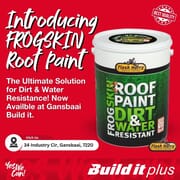
Introducing FROGSKIN Roof Paint: The ultimate solution for dirt and water resistance, now available at Build it Plus Gansbaai!

In-Store Services

In-Store Services

Build it Plus Gansbaai and Hermanus is a well-established and reputable brand that has become a trusted household name in the building supplies and construction materials industry.

How To Paint The Roof Of Your House Step By Step

How To Paint The Roof Of Your House Step By S...

Painting the roof of your house is an effective way to improve its appearance and protect it from damage caused by the elements. 

Wooden Trusses the Economical Roof Support Solution

Wooden Trusses the Economical Roof Support So...

Wooden trusses are commonly used in the building industry and are typically made from strong, lightweight woods such as spruce, pine, or fir.