


Not Afraid
“This is it? You’ve got to be kidding.”
Every white family in Rhodesia could afford at least one houseboy and often a gardenboy as well. They lived on the property and received rations in the form of mealie-meal, meat, bread and jam, tea and sugar. They were warned that pilfering would result in instant dismissal and were paid £1.10 a month. We had several houseboys over the eight years we were in Gwelo but I can only remember the three who lasted the longest: Samuel, Joseph and Samson. Their duties included washing up, sweeping, cleaning and floor polishing. As well as cooking, my mother did the washing in a washing machine that had a manual wringer consisting of two rubber rollers and a crank handle. The houseboy did the ironing, which was his most arduous task. Every item of laundry had to be ironed as a precaution against tropical diseases spread by insect larvae.
The houseboy’s staple food was mealie-meal. It was prepared as a stiff porridge known as sadza, and was cooked in a pot over an open fire on the ground in front of his kaia. He would also cook some meat to go with the sadza. This was poor quality stewing beef cut into bite-sized cubes and sold by butchers as boy’s meat. My mother kept the boy’s meat and the pet mince on the same shelf in the fridge. The mince was of an even worse quality, consisting mostly of floor sweepings. Mick, our mixed breed excuse for an Alsatian, was obliged to eat it raw in uncooked mealie-meal porridge.
I enjoyed sitting at the houseboy’s fireside watching him prepare his meal and eat it, as did Jean when she was a little older. A large pinch of sadza was taken from the pot, compressed and shaped between the fingers and then dipped in the meat pot to soak up some gravy. When I was allowed a taste I found the meat tough but the sadza was delicious.
In 1902 Pass Laws were enacted requiring all African males over the age of 14 to be registered with the authorities and issued with a pass, known in Fanagalo as a stupa. By the 1950’s this law was being applied rigidly in order to control and restrict the movement of natives. It enabled the Europeans to maintain their dominance over the indigenous population and exploit a large source of cheap labour. A houseboy could not find employment without an up-to-date stupa. Some employers would confiscate the stupa in order to deter the ‘boy’ from wandering and getting up to mischief, knowing that the police would come down hard on any black man unable to produce a valid pass. This type of treatment caused resentment that was growing steadily in the late 1950’s. The first Gwelo riots broke out in 1960.
Our houseboy at the time was Samuel; a young man who my parents agreed was unreliable and lazy. One Saturday afternoon he asked permission to go into town, promising to be back by nightfall. The following morning he was nowhere to be found and we learned that the ‘munts’ had been rioting in the location overnight. The police had opened fire with buckshot but there had been no fatalities. On Monday morning there was still no sign of Samuel. Then, at around midday, he was seen standing at the kaia supported by another man. One of his knees was bloodied and badly swollen. He was clearly in a great deal of pain and wanted to be taken to the hospital. My mother phoned my father, who was working for the CMED (Central Mechanical Engineering Department) at the time, and he hurried home and called the police. A police Landrover soon arrived and Samuel was helped into the back. Before driving off the cop told my father, “Don’t worry, I’ll tell the doctors not to use anaesthetic.” It was the last we saw of that ‘lazy devil,’ Samuel.
This is my writer's blog and it's a pleasure to have your company. You’ll see that the site is designed to showcase my writing.
View ProfileXplorio is your local connection allowing you to find anything and everything about a town.
Read MoreShe agreed to cohabit with me only once we were married. Accordingly, after the performance of some Christian retuals and the completion of the necessary legal formalities, I held her to her word, she gave up her job and we set up home in the cottage...
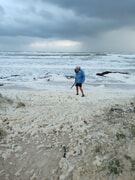
To make up for disrupting power supply for three days, the recent winter storm generated a massive amount of sea foam and drove it ashore on Monday.
A crystal radio receiver, also called a crystal set, is a simple radio receiver popular in the early days of radio.
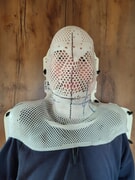
Doctor D phoned to say that the PET scan showed my lungs to be clear except for a non-malignant nodule, which meant curative treatment of the cancer in my neck could proceed.
Next to the cement step at the kitchen door was a foot scraper. This was a series of metal strips spaced about an inch apart on which to scrape off the mud from the soles of our shoes.