



Not Afraid
“This is it? You’ve got to be kidding.”

Semigration is the movement of people from one part of the country to another. Gansbaai and Pearly Beach have seen a flood of these semigrants to the area over the past two years. They are collectively referred to as ‘Inkommers’ and are welcomed for their contribution to the local economy. However, some of them are resented for the brashness, arrogance and insensitivity that they bring with them.
The Inkommer who I met a few days ago was neither brash nor arrogant, and he seemed genuinely interested in local history as well as the natural environment. I met him while walking my dog and we stood chatting at the side of the road. He told me he had recently settled in Pearly Beach after more than 30 years in Gauteng, where he had worked as a hydrologist in the Waste Water Management Department of the City of Joburg.
“So, you’re an expert in sewage disposal?” I asked. “Maybe you will be able to answer a question I have been asking myself of late.”
“I would be happy to share my knowledge.”
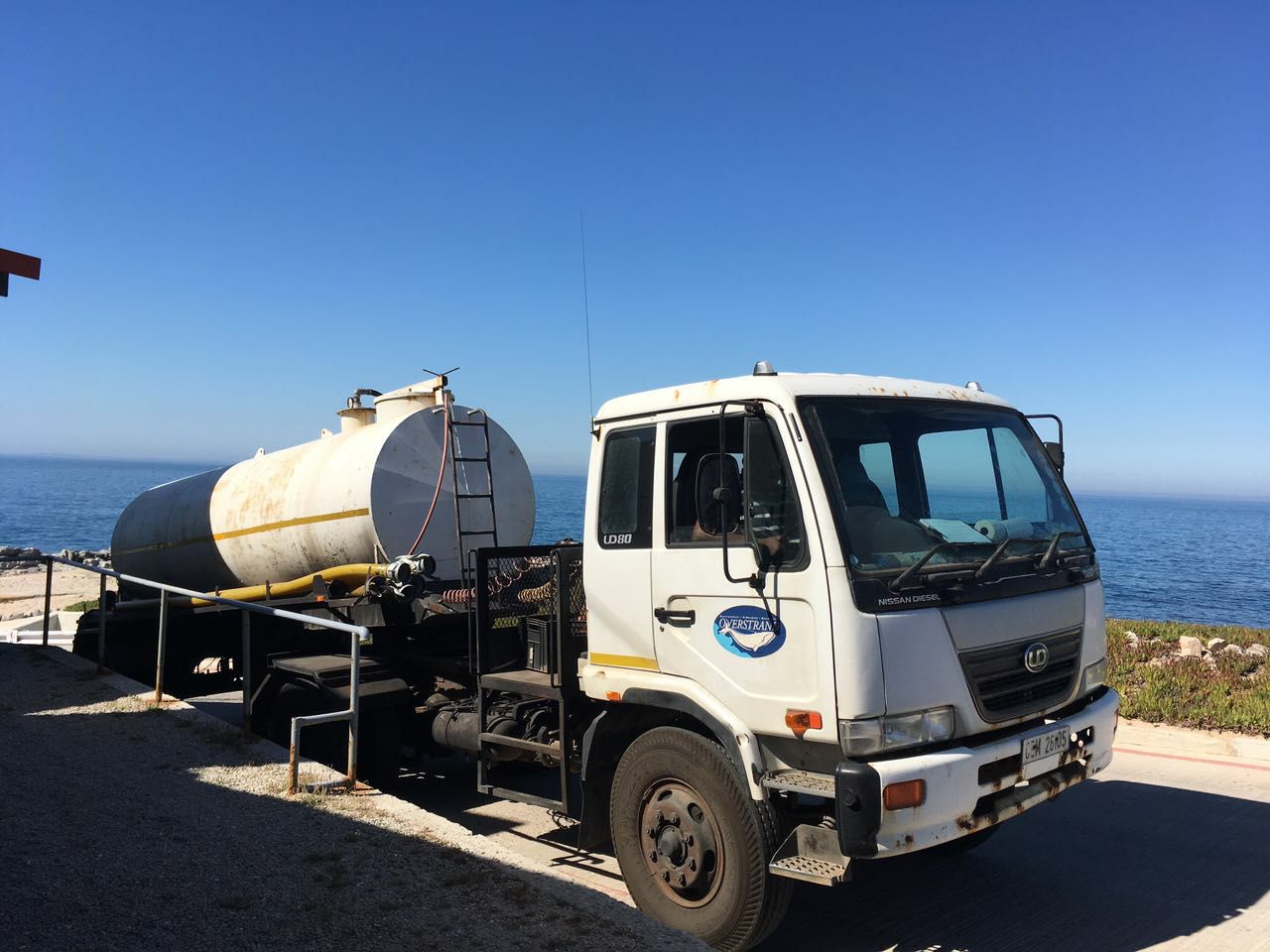
I started by telling him that I had noticed that all the new houses that were going up discharged their waste water into a conservancy tank built close to the street boundary. On enquiry, I had been informed that when the tank filled to capacity it had to be pumped out by the Municipal sewage tanker at a cost of R700 per 6000litres. The effluent was then transported to the treatment works. Now, my question was this: why aren’t new home owners allowed to install old fashioned septic tanks like mine, which seldom need to be emptied?
“This is a subject close to my heart,” he said. “A septic tank is far more ecologically friendly than a conservancy tank. And I’ll tell you why.”
He then went on to explain that in a septic tank the solid matter, which some vulgar people refer to as shit, is broken down by bacteria and microbes in an anaerobic process that does not require oxygen. This takes place mainly in the first of two chambers, where the heavy stuff settles and the partially purified water overflows into the second chamber. There the process continues and almost clear liquid is discharged into the drainage field, where organisms in the soil complete the purification process.
“That’s the soakaway, right? And with a conservancy tank? What happens to the sewage that gets carted away?”
“It goes to the Eluxolweni waste water treatment works. There it is pumped into what is known as an oxidation pond.”
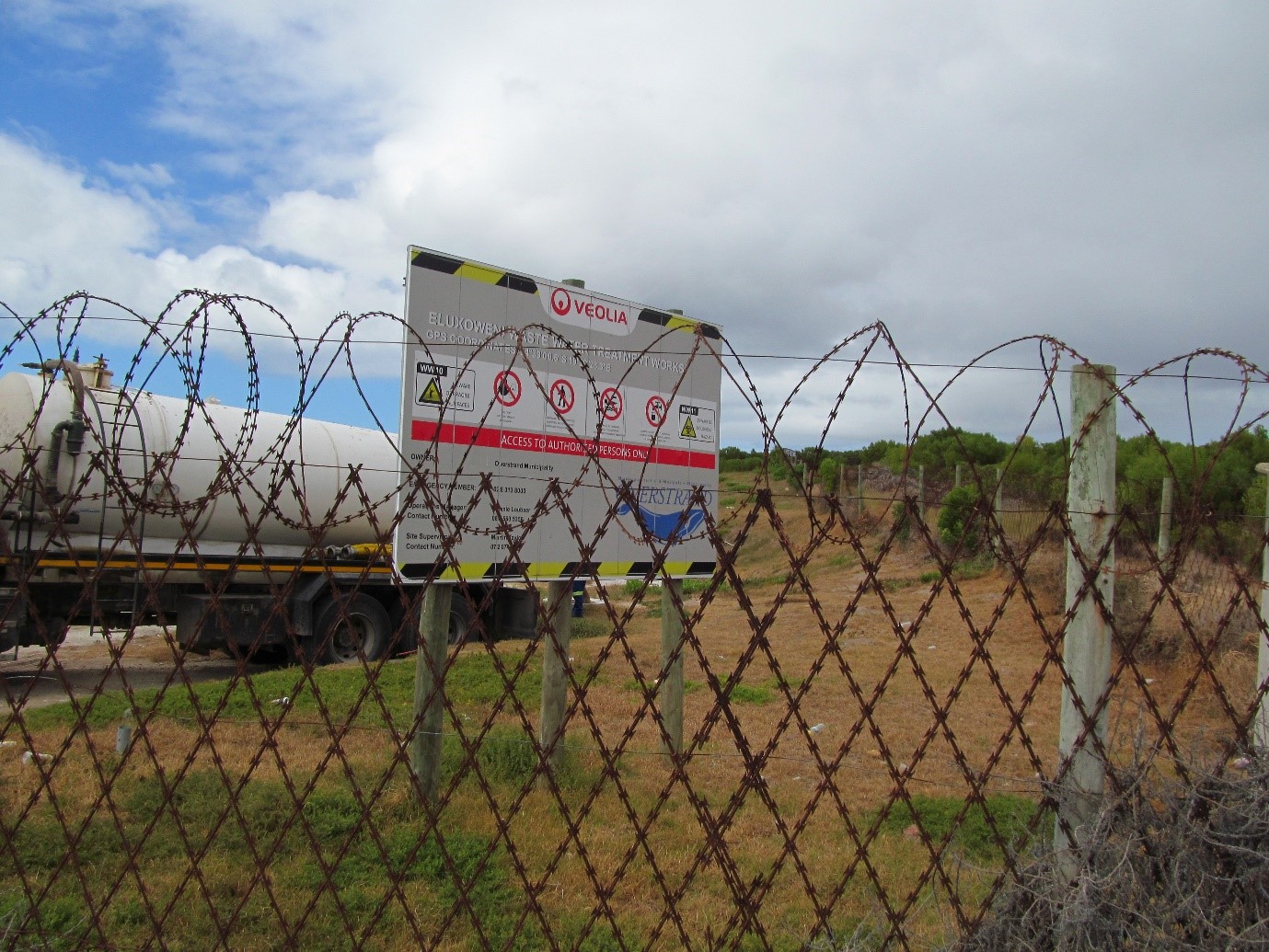
This, he said, is like a lagoon that consists of a series of shallow, open concrete channels that become submerged and disappear from sight. It is designed to treat wastewater through the interaction of sunlight, bacteria, and algae. Algae grow using energy from the sun and carbon dioxide and inorganic compounds released by bacteria in water. During the process of photosynthesis, the algae release oxygen needed by aerobic bacteria. This mutually beneficial interaction breaks down organic material in the effluent and all that is left is a minimal amount of sludge.
“So, like with the septic tank, it is an effective biological way of disposing of raw sewage? But why do you say the septic tank is ecologically more friendly?”
“Most of pearly Beach is built on sand and the water table is very low, so there is little danger of contamination from a soak away. With two tankers constantly riding up and down, a lot of diesel gets consumed, thereby adding to our carbon footprint.”
He went on to say that, as the area had become more populated, many new properties, especially in the Resort and Eluxolweni, were too small to accommodate a septic tank. That was why a treatment works had become necessary.
“But I still don’t understand why homeowners with a regular sized plot are not allowed to build a septic tank.”
“Think about it. It costs money to run the system. The Municipality needs as much revenue as it can get. By making everyone take the conservancy route, those tankers ar kept busy generating an income. Disallowing septic tanks means that some people in the community will be subsidising others. It’s unfortunate but unavoidable.”
“Now it makes sense,” I said, jerking the lead and getting my dog to her feet. “Thanks for the explanation. I am going to share this info next time I go to the pub, where the locals gather and like to talk sewage all the time.”
This is my writer's blog and it's a pleasure to have your company. You’ll see that the site is designed to showcase my writing.
View ProfileXplorio is your local connection allowing you to find anything and everything about a town.
Read MoreShe agreed to cohabit with me only once we were married. Accordingly, after the performance of some Christian retuals and the completion of the necessary legal formalities, I held her to her word, she gave up her job and we set up home in the cottage...
To make up for disrupting power supply for three days, the recent winter storm generated a massive amount of sea foam and drove it ashore on Monday.
A crystal radio receiver, also called a crystal set, is a simple radio receiver popular in the early days of radio.
Doctor D phoned to say that the PET scan showed my lungs to be clear except for a non-malignant nodule, which meant curative treatment of the cancer in my neck could proceed.
Next to the cement step at the kitchen door was a foot scraper. This was a series of metal strips spaced about an inch apart on which to scrape off the mud from the soles of our shoes.